
Ask Jimmy: For What?
A measurement in story-telling.
At eleven-fifty-eight, I sent the Joint Observing Committee its revised target list.
Same coordinates. Same times. Radio and Iron would examine the same piece of quiet Sun, if the committee gave us the time.
It had taken two weeks of preparation, twelve minutes of testimony, one (pretty cool) drawing of a mountain, and a favor Maya still refused to discuss.
I refreshed my inbox.
Across the desk, she unfolded the paper around her sandwich. Her hearing notes lay beside it, one corner turned back where she'd held the page. I could still hear myself asking which temperature was right.
I refreshed again.
Maya tore the sandwich in half and put a piece on my notes.
“Eat. It'll still be there when you're done.”
I reached for my half, then pulled my hand back.
“Why do you have that look?” Maya asked.
At twelve-oh-six, I ruined our lunch.
“Why do we need Jimmy?”
Her sandwich stopped halfway to her mouth. She looked past me at the wall.
“I cannot have this discussion with you right now.”
I heard how it had sounded. As if I'd grown bored of being exhausted.
“For the energy budget, I mean. Finding him might explain the temperatures. That alone wouldn't tell us how much heat the electrons carry across the boundaries. We need that to judge whether a heating mechanism can pay the bill.”
“One might think you'd have opened with that.”
She took a bite, giving me a moment to recover. I left my half where she'd put it and picked up the marker.
Jimmy stood atop his little mountain. Beneath him sat the two temperatures: 620,000 and 1,500,000 degrees. Above them, in Maya's handwriting:
ASK JIMMY.
I added:
FOR WHAT?
“Please don't send that to the committee,” Maya said behind me. “We usually calculate heat flow from a temperature gradient. You've been worrying about the assumptions for years. What changed between the hearing and lunch?”
I turned toward her. “Maybe we don't need every detail of the electron crowd. Just enough to work out what's being carried across those boundaries.”
She leaned back. “That could be less work. Or the same work with a fake nose and glasses. And the old calculation could still be right, so we'd do it all for nothing.”
“I'd settle for finding out we can trust it.”
I drew a room with a doorway.
“Ah, architecture now,” she said. “At least it isn't another mountain.”
“Fifty people leave with heavy bags of energy. Fifty enter with light ones. All in the same minute.” I made air quotes with my free hand. “No net movement of people, but energy leaves. Swap the bags and energy enters.”
Maya set down her sandwich and came over. She took the marker and thickened the inward arrow. There was a small patch of ink along her thumb. I wondered how much of her night she'd spent on the equations she'd brought back that morning.
“I follow. Even if we can count the electrons, we don't know what they're carrying. Unfortunately, your door is ninety-three million miles away.”
“I was going to call it the bag problem.”
She handed back the marker. “Please don't.”
I put a bag beside Jimmy.
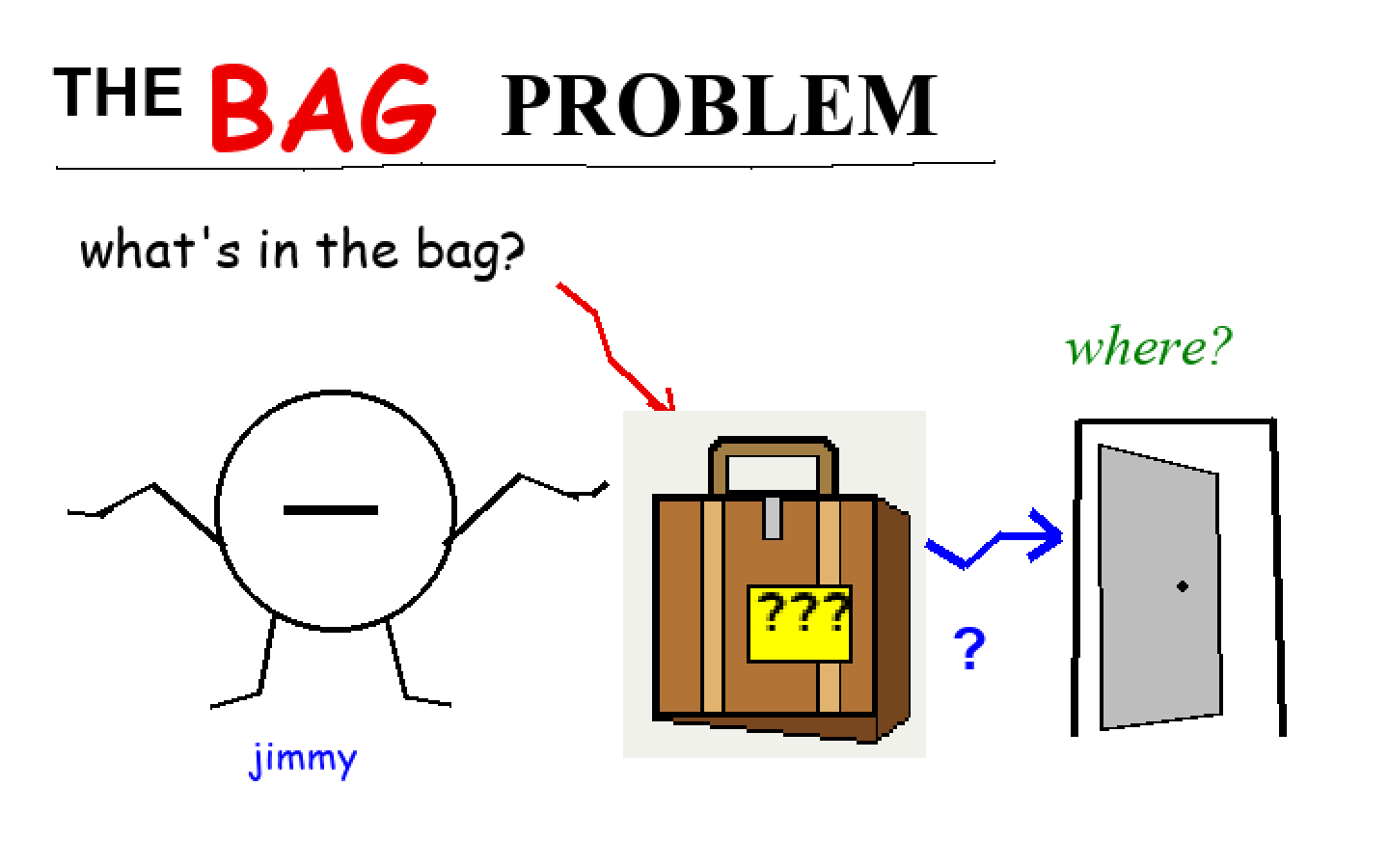
“Is he leaving with what he came with? Or did he steal something?”
Maya looked at the arrows. “You haven't even checked his bag. He might have left something behind. And we need the account for everyone crossing that door.”
I was fond of the idea of Jimmy. I knew how to explain why we were asking about him. “Perhaps we can do without him” was harder to put on a slide.
Maya went back to the desk and opened the submitted target list.
“Look, I want them to say yes too.”
I looked at her. She kept her eyes on the list.
“But we asked for a fair comparison,” she continued. “I put my name behind that. If you turn it into a promise to measure coronal heat flow, guess who gets to explain the difference.”
Her finger rested beside the coordinates. Her favor had got us into the room. I still didn't know what it had cost her, and—apparently—it hadn't stopped counting when we left.
I sat down and capped the marker.
The easy thing was to point to the list. Nothing in it had changed. I could show her that and be technically right.
I put the marker down.
“Hey, I still want the observation,” I said. “I just don't know if finding him gives us what we need. And I don't know how to tell you that after you did all this.”
I wanted to explain the doorway again. It was easier than looking at her.
“You just did,” Maya said.
She turned the laptop so we could both see it.
She looked at me. “Let me help.”
“Then help me check the energy requirement,” I said. “When I hear ‘requirement,' I assume it's been properly bounded and scoped.”
“Well, well, well. Then what is your claim for heating the corona?” Maya asked, in her best committee voice.
“I don't have one. I can defend those two numbers.” I pointed at the wall. “I don't yet know whether their disagreement changes the heat flow we've been assuming.”
I went on. “If we deliver exactly what was asked for just to find out we all actually needed something else, a hard requirement turns into scope creep. If I see it coming, I have to say it.”
She looked from the laptop to me. “Are you a scientist, a detective, or a lawyer?”
“The job only pays if you call yourself a consultant.”
“Then why not wait until they approve it? You have enough here to get paid.”
“I never said I was a good salesman.”
Maya let go of the laptop, half-smiling. “Then why do it at all?”
“Because I might be a good businessman.”
“I'm done with your riddles.”
The target list was still on the screen. I hadn't changed a word.
“At the end of the day, I don't want us to get what we asked for and still not know what we need.”
Maya held out her hand for the marker.
“Then decide how well we need to know it. Ask your witnesses—one saw the bags, another saw which way the crowd went. Which crowds still fit both stories? Once the other budget terms are accounted for, can a mechanism pay every bill those crowds allow? Can it pay even the smallest? If it passes one and fails another, we need more evidence.”
She went back to the wall and wrote beside FOR WHAT?
ENOUGH TO RULE WHAT OUT?
“And first,” she said, “show that this uncertainty can actually change a heating verdict. If all the crowds still in your lineup give us the same verdict, we don't need to pick one.”
She put the marker on the desk. I reached past my untouched sandwich and opened my solar-wind file.
With Wind, we had measurements of the electron crowd itself. My plan began with one measured distribution and its heat-flux calculation, then deliberately removed information: energies, directions, both. Within the physical restrictions and measurement errors, how different could the heat flows be among crowds still allowed by what remained? Restore information and see what narrowed the range.
Maya brushed the crumbs from her notes and pulled the laptop closer.
“Let me see what you're allowing. If your restrictions have decided the answer for you, we can both go home.”
She scrolled past the early examples and stopped at the uncertainty work. The computer could give me beautifully precise bounds. It just couldn't certify the errors I had put into it.
I reached for the trackpad. She held up one finger, keeping her place on the screen.
I finally ate the sandwich. The bread had dried a little at the crust.
“You spent the whole night complaining that measurements throw information away,” Maya said without looking up. “Now you're doing it yourself.”
“It's like defusing something that could blow up. Gotta be careful.”
She raised an eyebrow. “Hmm.”
The light reached the bottom of Jimmy's mountain while she read. I could have opened my inbox on the phone. I decided to leave it face down beside the hearing notes.
“All right,” Maya said at last. “That's worth testing. But Wind hasn't volunteered to trade shifts with the corona.”
“I know. Different collisions, boundaries, geometry, yadda-yadda-yadda. We still have to find out whether the coronal measurements can do the job.”
“Then report it if they can't. Don't sneak Jimmy back in because you miss him. How about you tell me your target this time?”
She pushed the laptop toward me and waited. The clock read two-thirty. I checked my inbox.
Still nothing.
“I'm going home,” Maya said. She stood and put one arm into her coat.
Outside, the Sun was doing whatever it had been doing all along, entirely unaware that we had named one of its electrons Jimmy.
“What if he could talk?” I asked.
“I would make him tell you to go home.”
I imagined Jimmy looking back at us, then gave him a deep, bellowing voice.
“You keep asking who I am. You haven't even asked what's in the bag—or where I'm taking it. Ha. Ha. Ha.”
I looked at Maya. “See! That's why I call it the bag problem!”
“Oh my God.” Maya stopped at the doorway and laughed. The tired smile came back. “Seriously. Come on. Let me hear it.”
I closed the file. “If we pin down the heat flow, we can narrow down the transport models. That helps narrow down which electron distributions fit. And knowing what a mechanism needs to do helps us narrow down the mechanisms.”
“But that doesn't identify the mechanism. Problem is still there.”
“Who said we'd solved it? That just defines our requirements for the solution.”
Maya pulled her other sleeve into place. “So you are a consultant.”
“Businessman.”